योग
योग चित्त वृत्ति निरोध
प्रकृति जड़ है और प्रकृति से बनी हुई सारी चीजें जड़ है, प्रकृति में तीन तरह के गुण होते हैं - सात्विक, राजसिक और तामसिक
चित या मन जड़ है,
आत्मा चेतन है
आसक्ति इच्छाएं पैदा करती है, आत्मा की इच्छाएं होती हैं, चेतन की इच्छाएं होती हैं, यह अपनी इच्छाएं मन से दिखाती है
पहले आसक्ति होती है, इच्छा आती है, फिर प्रयत्न आता है, फिर विचार आता है
दिन के समय में हमें द्वेष के विचार मन में नहीं लाने चाहिए, खाली दया परोपकारी विचार रहने चाहिए
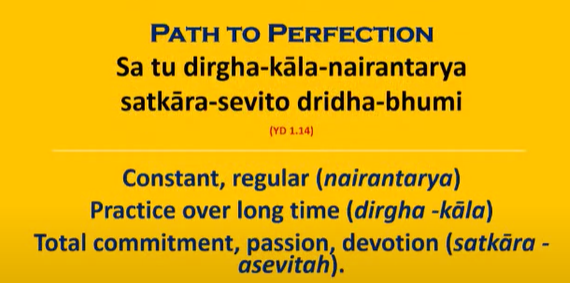
जब ध्यान लगाते हैं तो सारे विचार चाहे वह राग के हैं या द्वेष के हैं वह बंद करने का प्रयास करना चाहिए और इसके लिए ईश्वर परिधान ,अभ्यास और वैराग्य की जरूरत होती है
मन को चेतन आत्मा से नियंत्रण में किया जा सकता है अगर अभ्यास और वैराग्य करें तो
चेतन दो ही चीजें हैं एक जीवात्मा और एक है परमात्मा, जो चेतन है वही दृष्टा होता है, तो खाली आत्मा और परमात्मा, जीवात्मा और परमात्मा ही दृष्टा है
नींद मोक्ष का एक छोटा हिस्सा नहीं है या मोक्ष के बराबर की अनुभूति नहीं है क्योंकि नींद तो खराब हो सकती है, बीच-बीच में डरावने सपने आ सकते हैं पर मोक्ष में तो खाली आनंद ही आनंद होता है, तो नींद और समाधि एक ही बात नहीं है
नींद कई बार अच्छी आती है, आनंदमय नींद का कारण प्रकृति का सात्विक गुण होता है,
यह ईश्वरीय आनंद से अलग होती है, ईश्वरीय आनंद सिर सिर्फ समाधि और मोक्ष में होता है
समप्रजयत समाधि में जीवात्मा को पता होता है कि वह आत्मा और दृष्टा है, असमप्रजयत समाधि में जीवात्मा को पता होता है कि वह परमात्मा का हिस्सा है
समप्रजयत समाधि के प्रकार -वितर्क, विचार, आनंद, अस्मिता
आनंद समाधि में इंद्रियों के बारे में पता चल जाता है. Anand Samadhi has 13 padarth- 5 gyanendriyan, 5 karmendriyan, man, buddhi, and ahankar
अस्मिता समाधि में आत्मा की अनुभूति होती है. It has- 5 sthool, 5 sukshm padarth
Total 24-- 13 indriya, 5 sthool, 5 sukshm padarth, and one atma.
असमप्रजयत समाधि
परवैराग्य में सात्विक सुख भी नहीं चाहिए सिर्फ ईश्वर चाहिए
भव प्रत्य समाधि सांसारिक घटनाओं को देखने के बाद लगती है जैसे कि स्वामी दयानंद जी को लगी थी
उपाय प्रत्यय समाधि प्रयत्न से आती है जैसे कि अष्टांग योग से
विदेह योगी देह को अपना नहीं समझते हैं, वह देह को ईश्वर का मानते हैं और जानते हैं कि वह सिर्फ इस देह में रह रहे हैं, पर वह देह नहीं है
प्रकृति लय योगी सारी चीजों को प्रकृति में विलीन कर देते हैं, सारी चीजों को भौतिक स्तर पर तोड़कर प्रकृति में लीन कर देते हैं
उपाय प्रत्य योगी इन चीजों से समाधि लगाते हैं -
श्रद्धा -- ईश्वर के प्रति
उत्साह या वीर्य- ईश्वर के कामों के प्रति
स्मृति - ईश्वर की
समाधि
ऋतंभरा प्रज्ञा
समप्रजयत समाधि, परवैराग्, फिर असमप्रजयत समाधि
जो योग नहीं करता वह वृत्ति में होता है.
वृत्ति 3 तरह की होती हैं -विचार, ज्ञान, और अनुभूति.
वृत्ति के पांच प्रकार हैं -
- प्रमाण -प्रमाण तीन प्रकार के हैं प्रत्यक्ष, अनुमान, आगम
- विप्र या मिथ्या ज्ञान
- विकल या काल्पनिक बातें
- निंद्रा
- स्मृति
मोक्ष में तीन चीजें होती हैं -
- दुख नहीं होता है
- असीम आनंद होता है
-
सब जगह रहते हैं
ईश्वर की पहचान कैसे करें
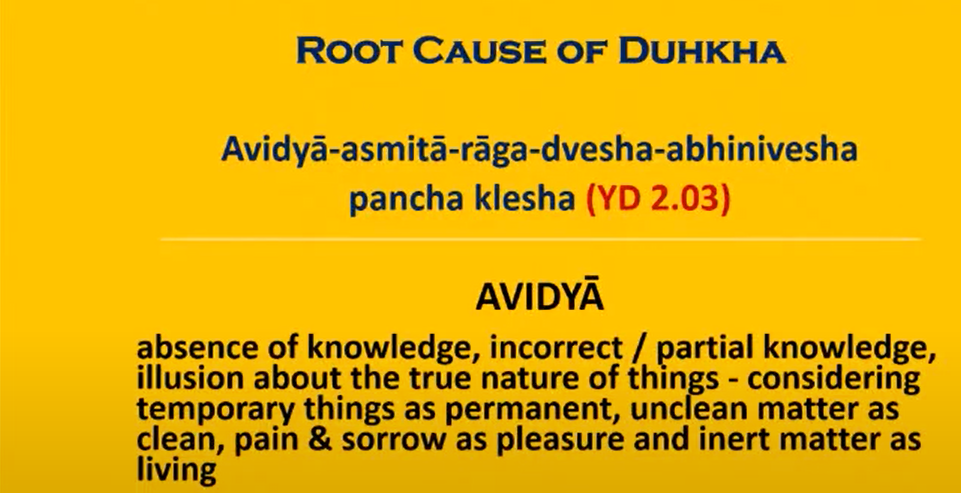
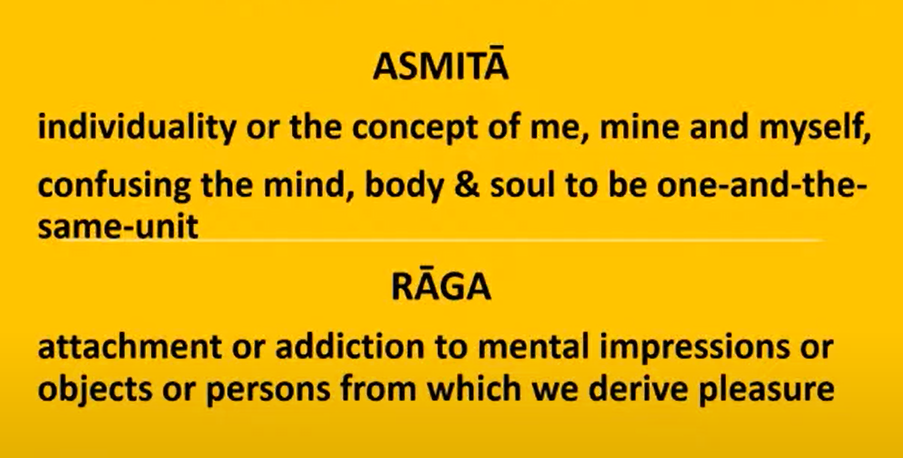
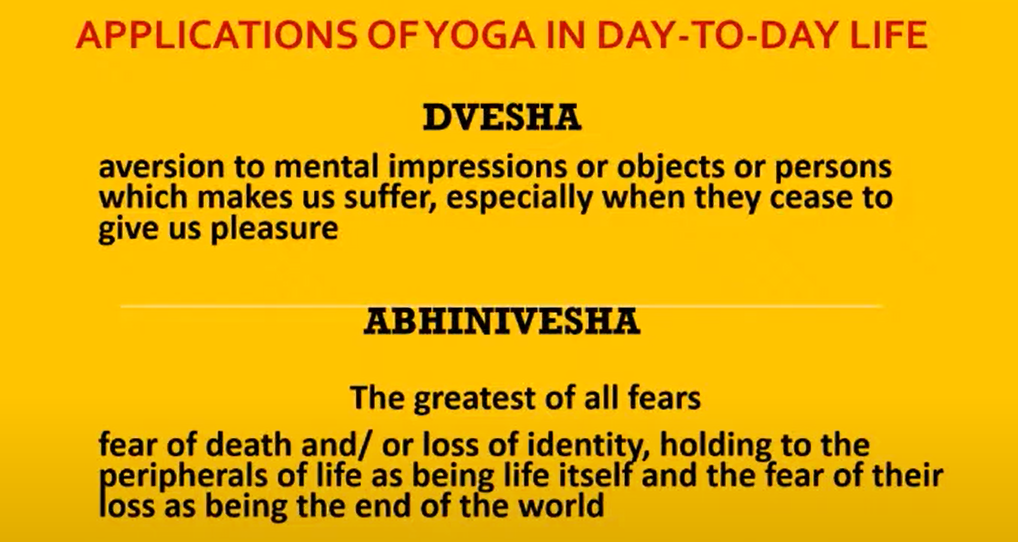
ईश्वर में यह चीजें नहीं होती- पांच प्रकार के क्लेश- अविद्या, अस्मिता, राग, द्वेष, और अभिनिवेश (मृत्यु का डर)
- वह कर्म जो क्लेश से उत्पन्न होते हैं
- विपाद (कर्मों का फल). वह विपाद से परे है
- आश्रय (संस्कार)
-
ईश्वर में यह होता है-- निरअति शयम (सबसे अधिक), सर्वज बीजम -सर्वता का कारण,
सांसारिक कामनाओं के लिए किया गया कर्म सकाम कर्म होता है
मोक्ष की कामना के लिए किया गया कर्म निष्काम कर्म होता है
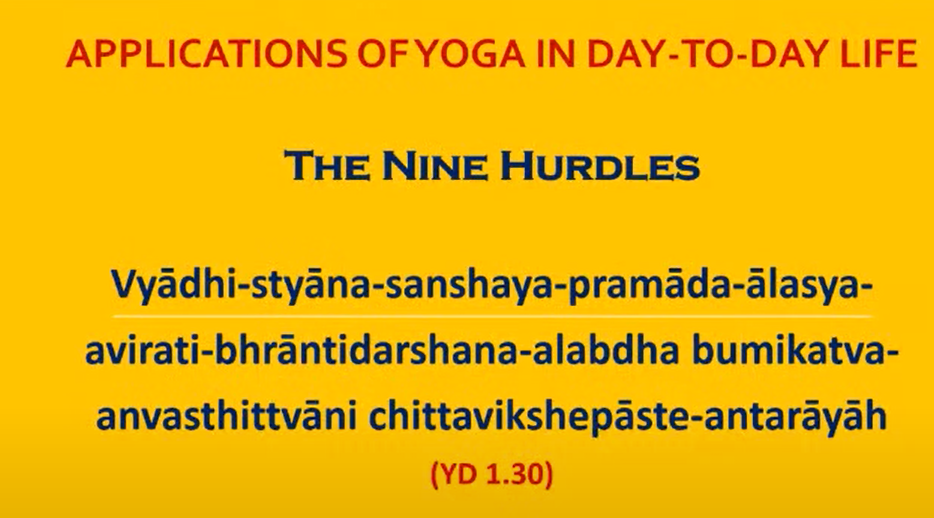
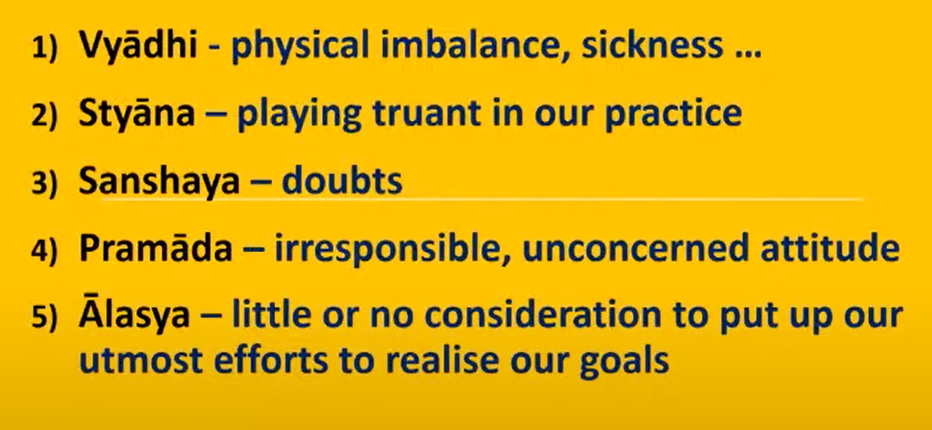
Yog Stoppers or Badhaks reversed by Ishwar Paridhan
-
Vyadhi- Disease
-
Astaan- person remembers to do dhyan but makes excuses
-
Sanshya-doubt
-
Pramad- forgets to do dhyan
-
Aalasya--remembers and has time but will not do it
-
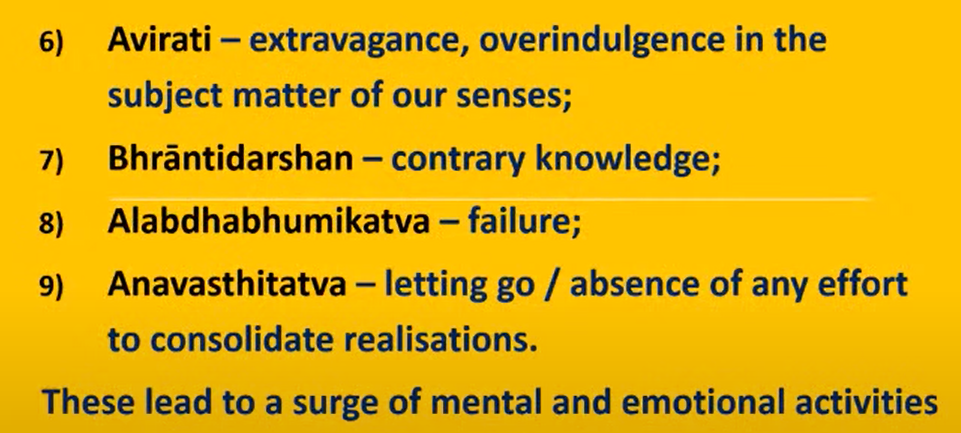
Avirati-Rati is raag or aasakti, Virati is vairagya, Avirati is absence of vairagya
-
Bhranti darshanam- believes in myths
-
Alabdh bhumitatv-- person thinks that there is no progress
-
Anavasthi tatv- achieves something and then goes back to previous state
-
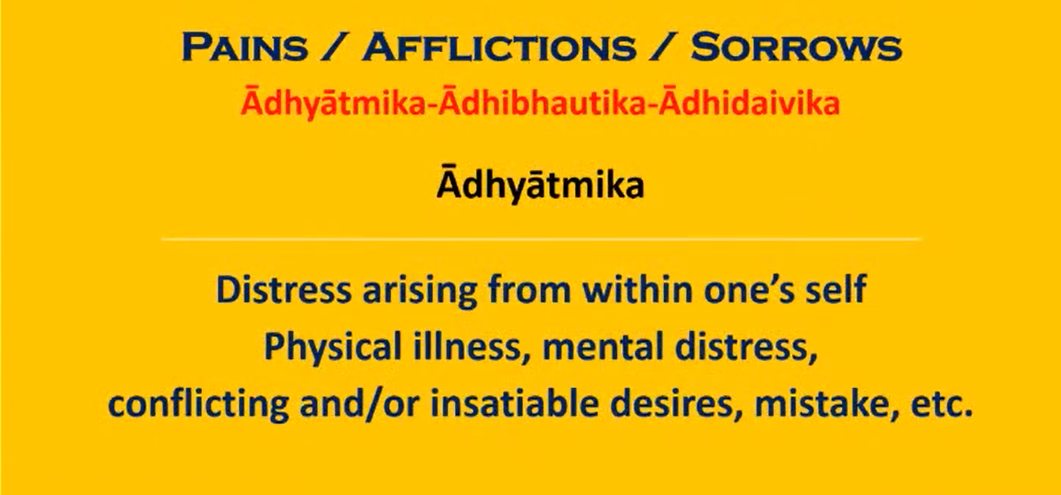
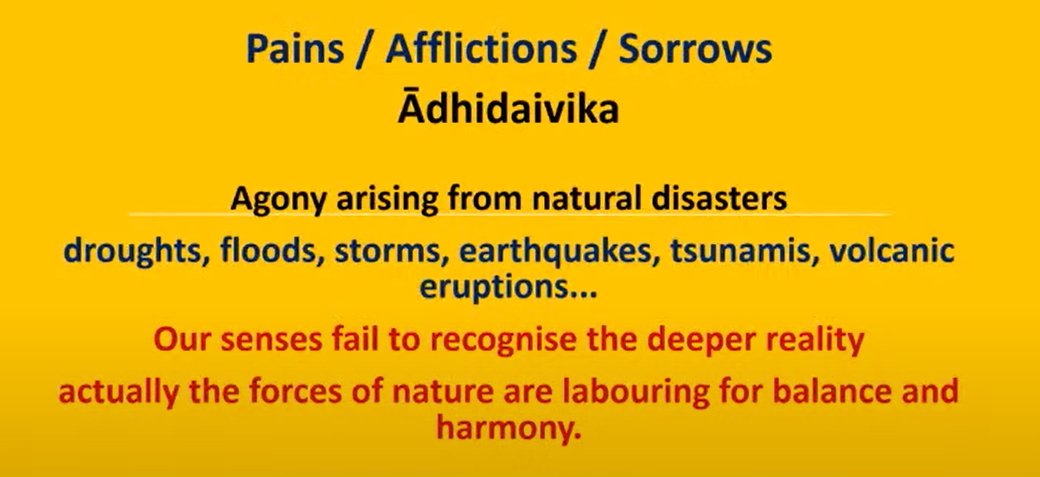
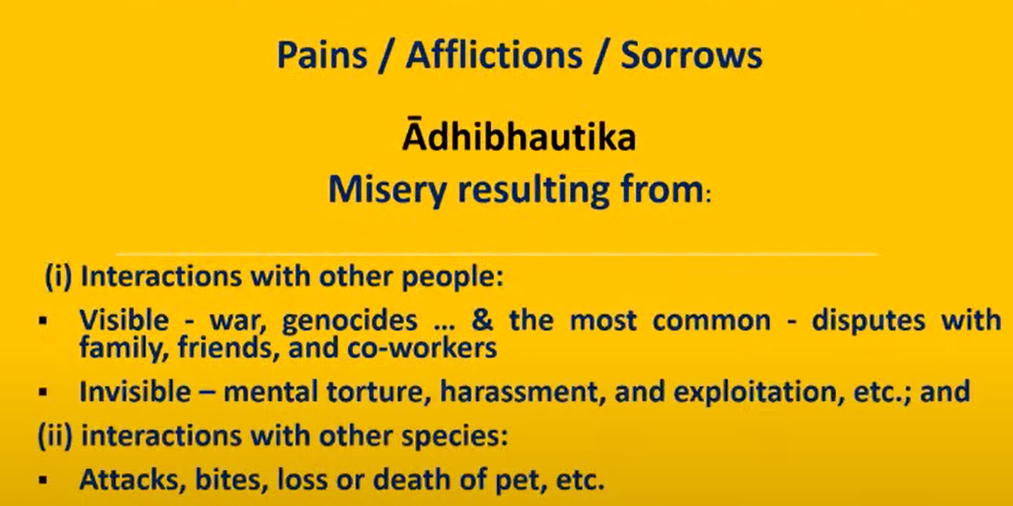
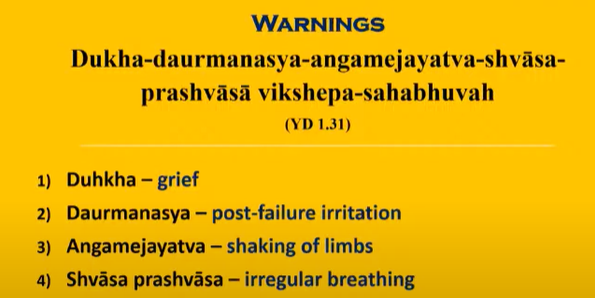
Dukh-- 3 types- adhyatmic because of own fault, aadibhoutik because of other humans or species, aadidevik because of devtas e.g earthquake, natural disasters
-
Daurmanasya or Kantala- affected by conditions, circumstances, and people
-
AngmayJayatv- Ajayatv means movement, ang is body parts. Movement of bodyparts
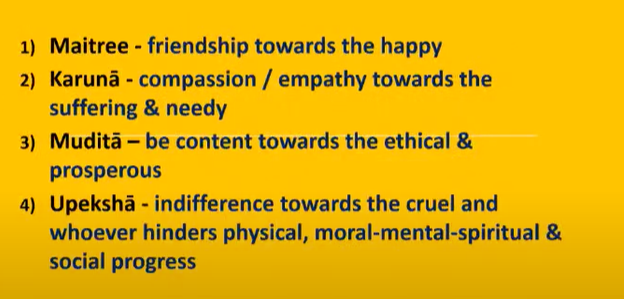
Bhavnatmak, maitrepurn relations with sukhi, friendly log
Daya bhavna for dukhi and karunamai people
Mudita or prasanta bhavna with punya log
Upeksha or ignore bhavna for apunyatma, doost log e
Anger or krodh can be tackled with:
- Prem
- Karuna
- Samta
-
ignoring
Dhyan is the stage to find Samadhi.
Atma gets Samadhi, Chit gets Samapati.Grahitri, grahan, Grahyeshu
Graheyea- total 10--5 sthhol and 5 sukshm things
Grahan- 13 things of anand samadhi or 13 indriya
Grahitri is same as atma
Total 24-- 13 grahan, 10 graheyea, and one grahitriOnce a person attains Moksha, he stays there for 36000 yrs.
Are the four streams of Yoga similar and take us to the same goal? I do not think so.
Patanjali's Ashtang Yog's goal is to merge with Parmatma. The last few sutras of Patanjali say that a merger happens when all gunas go back to their original state, time and space stop existing, and karma balance becomes zero.In Bhakti yog, there is intense devotion towards a being. However, it comes at the cost of attachment. This attachment, even if it is with Bhagwan, will not let us succeed in the merger with Supreme power.
In Karma Yog, we create more karmas, whether we want it or not. Every action or karm is good for some and bad for others. Even if we use equanimity in karma and do it for the greater good of society, it involves some entanglement. It will not let us get free from the birth and death cycle.
In Jnana Yog, we practice intellectual ability and gain knowledge to discriminate and enjoy sattvik satsangs. However, all these create thoughts. The ultimate merger needs a thoughtless state of mind. Remember, Vijnanmaya kosha is different than Anandmaya kosha. We can not establish ourselves in Anandmaya Kosha if we do not progress from Vijnanmaya Kosha.

Bharti Raizadahttps://archive.org/details/maharishi_patanjali/01Prakkathan.mp3
https://patanjaliyogasutra.in/samadhipada1-2/
https://archive.org/details/maharishi_patanjali/04PrathamAdhyayaSamadhipadSutra32To51.mp3
https://terebess.hu/zen/mesterek/SankaraYogaSutras.pdf
https://www.gita-society.com/wp-content/uploads/PDF/Patanjali-yogasutra.IGS.pdf
पहले से ही सामर्थ्य नही होने की बात करना ही --- नकारात्मकता कहलाती है
सामर्थ्य जन्म से नही होता, विकसित किया जाता है, समर्थ की शरणागति सेWhile Sakshi Bhav (witness consciousness) is celebrated for bringing inner peace and emotional balance, its main drawbacks arise when misapplied. It can lead to detachment from responsibilities, emotional suppression, or spiritual bypass, making it less effective for practical decision-making and relationships.The most common pitfalls of this practice include:
- Spiritual Bypass & Emotional SuppressionMasking Trauma: Instead of processing difficult emotions, one might use witnessing as a way to suppress or ignore them. Avoidance: It can turn into a mechanism to escape reality rather than face and heal it.
- Detachment and Apathy. Loss of Motivation: By observing everything neutrally, you may lose the drive to pursue personal goals or contribute meaningfully to the world. Reduced Empathy: A purely neutral observer might struggle to show deep emotional support to loved ones, appearing cold or disconnected.
- The Ego Trap of "Being the Witness"False Identity: Believing "I am the witness" can actually create a new, subtle ego identity, leading to feelings of spiritual superiority over others. Forcing the State: Trying too hard to be a witness often leads to frustration and self-judgment, which directly contradicts the non-judgmental nature of the practice. 4. Impracticality in Action. Ineffective in Diplomacy: While "Sakshi Bhav" makes for a great philosopher or judge, it falls short when active problem-solving or persuasion is required. Hindered Decision-Making: Some situations demand immediate, passionate action rather than passive observation.
Best Practices to Avoid These Drawbacks To utilize witness consciousness safely, practitioners suggest:
Feeling Before Observing: Allow yourself to feel the emotion naturally, and only step back into the witness role when the initial intensity passes.
Balance: Integrate it with Bhakti (devotion) or Karma (action) to stay grounded and connected to your worldly duties.For a deeper dive into the philosophy behind this, consider reading insights on Life Positive or exploring guided meditation resources on Insight Timer.Are you trying to apply Sakshi Bhav in a specific area of your life, such as relationships, work, or daily stress management?